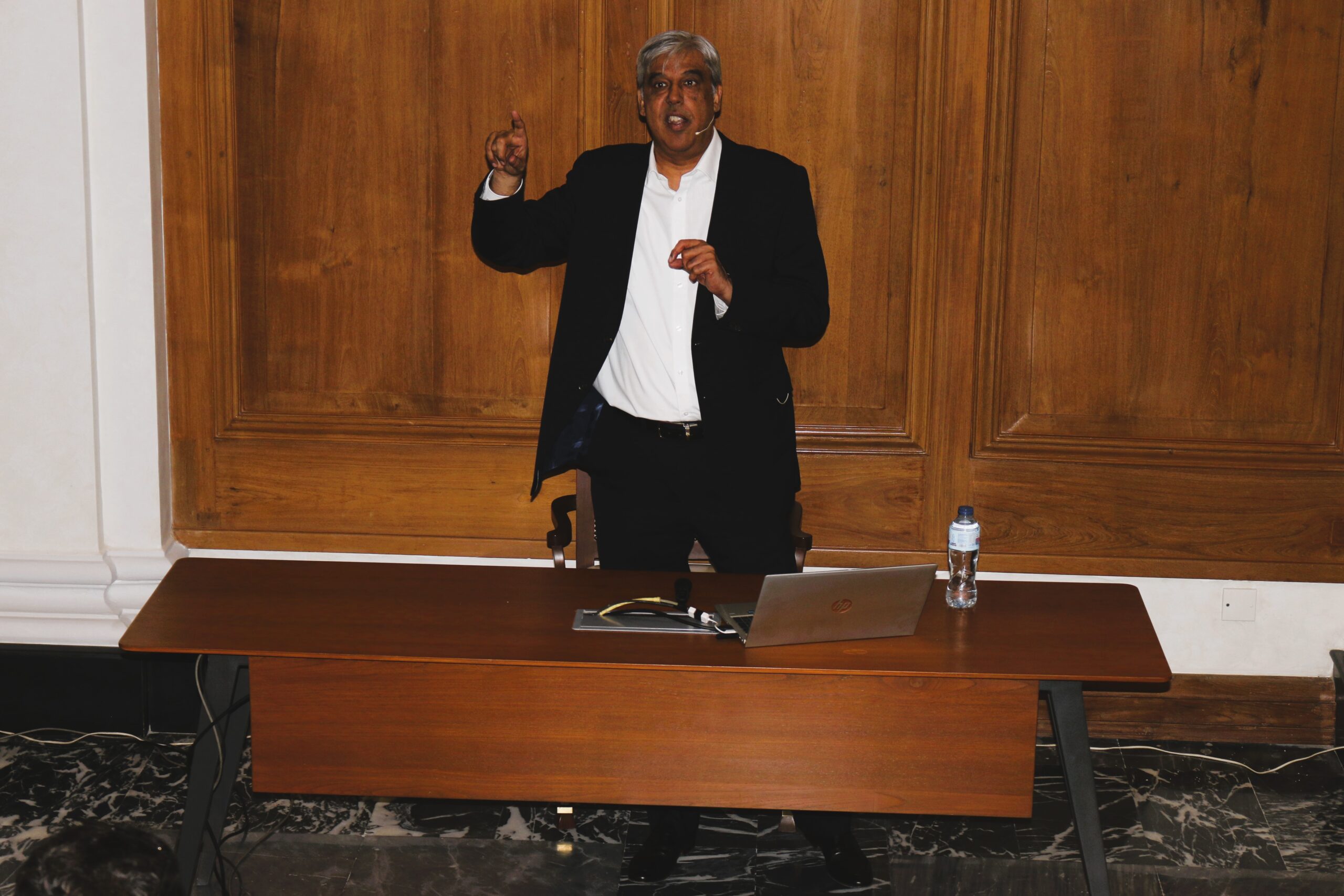
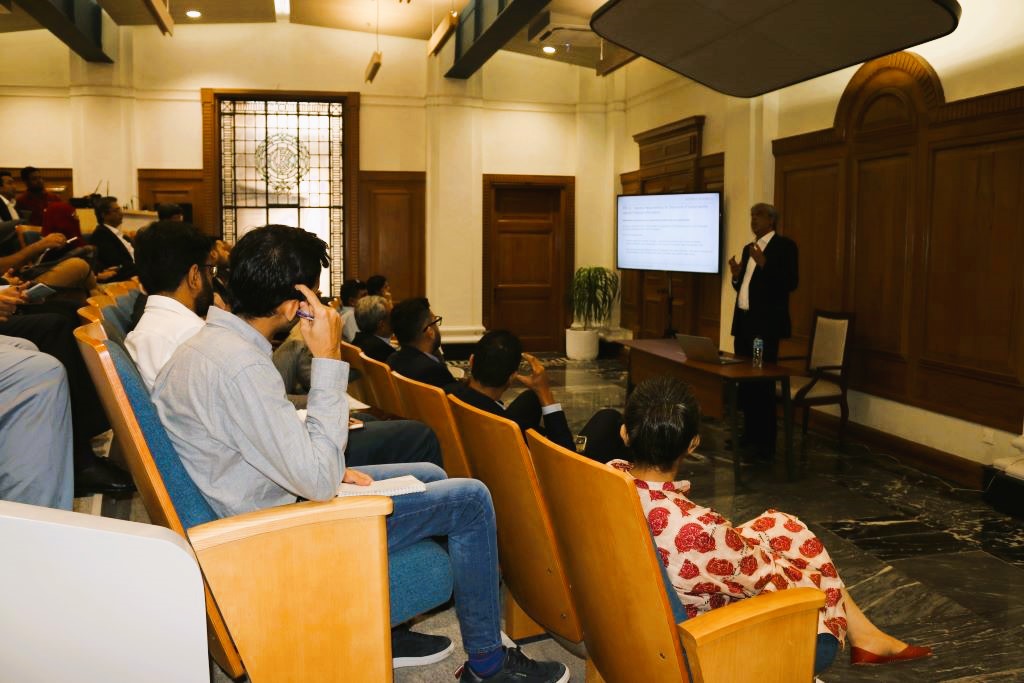
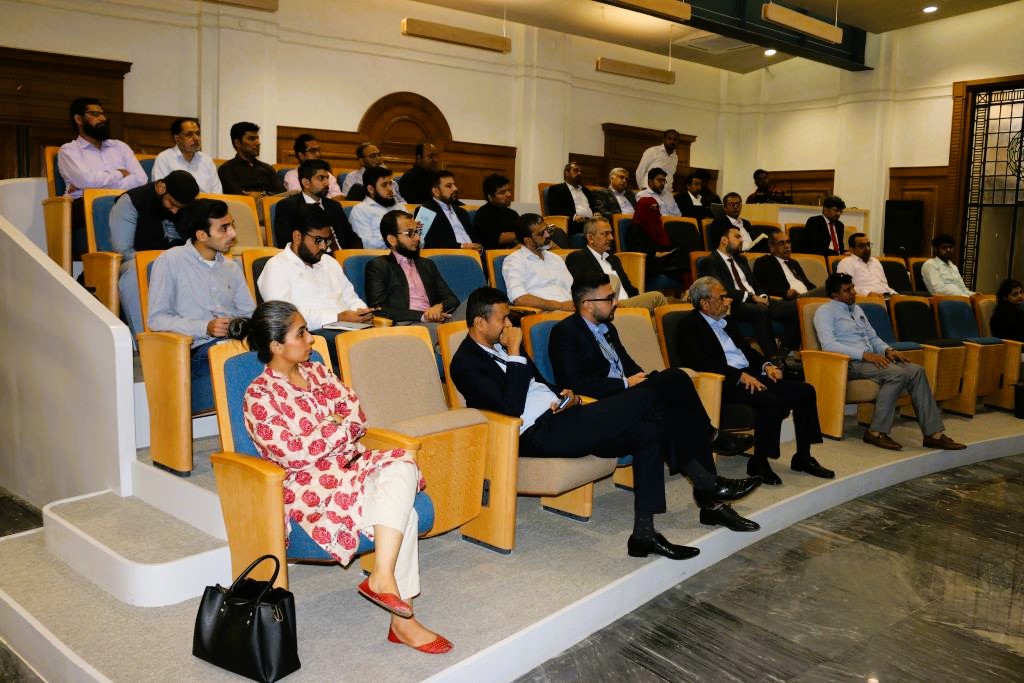
Overseas Investors Chamber of Commerce and Industry hosted “OICCI Session on ESG Reporting Standards” in partnership with A. F. Ferguson & Co (AFF), member of PricewaterhouseCoopers (PwC). The objective of this session was to assist members develop a better understanding of the IFRS Sustainability Disclosure Standards (IFRS S1 and IFRS S2). Session was conducted by Farrukh Rehman, Partner AFF, ICAP Council Member, Chairman Accounting Standards Board of the ICAP.
Welcoming the guests, M Abdul Aleem, CE/Secretary General OICCI, shared that sustainability is one of the major challenges at present. The struggles against climate change and developing resilience is just a part of sustainability. Although ESG reporting has not become mandatory in Pakistan, yet OICCI has arranged a number of sessions on developing better understanding on ESG reporting and will continue to do as we expect OICCI members to remain ahead of the curve.
The keynote Speaker, Farrukh Rehman, Partner AFF, presented the history and objectives of ISSB (International Sustainability Standards Board), IFRS S1, IFRS S2 and the status of Pakistan on sustainability reporting. ISSB was formed at COP 26 in November 2021 to develop standards for a global baseline of sustainability disclosures, help investors with information, enable companies to provide comprehensive sustainability information and facilitate interoperability with disclosures that are jurisdiction-specific and/or aimed at broader stakeholder groups.
IRFS S1 is the core framework for the disclosure of sustainability-related risks and opportunities that is useful to primary users of general-purpose financial reports in making decisions relating to providing resources to the entity. For this, an entity is required to refer to and consider the applicability of the disclosure topics in the Sustainable Accounting Standards Board (SASB) standards. It is effective at the beginning of annual reporting periods or after the January 1, 2024 and the businesses are required to publish sustainability-related financial disclosures and annual financial statements at the same time.
IFRS S2 requires an entity to identify climate-related risks, physical risks and transition risks, and opportunities that could affect the entity’s prospects over the short, medium and long term. Physical risks result from climate change that can be event-driven (acute physical risk) or from longer-term shifts in climatic patterns (chronic physical risk) whereas the transition risks arise from efforts to transition to a lower-carbon economy. Scope 1, Scope 2 and Scope 3 GHG emissions should be disclosed in accordance with the GHG Protocol Corporate Standard. Both standards are based on the four pillars, governance, strategy, risk management, and metrics and targets. As far as Pakistan is concerned, Farrukh shared that there is no mandatory requirement to publish Sustainability Reports. Securities & Exchange Commission of Pakistan (SECP) has issued an ESG Regulatory Roadmap towards creating awareness, capacity building and adoption of sustainability standards for corporate reporting. An action plan has also been prepared to achieve the road map objectives by allocating responsibilities to various organizations including PICG, PSX and ICAP.
The session ended with an engaging Q&A session. Closing the event, M Abul Aleem appreciated Farrukh Sb and the participants for a session full of knowledge and information.