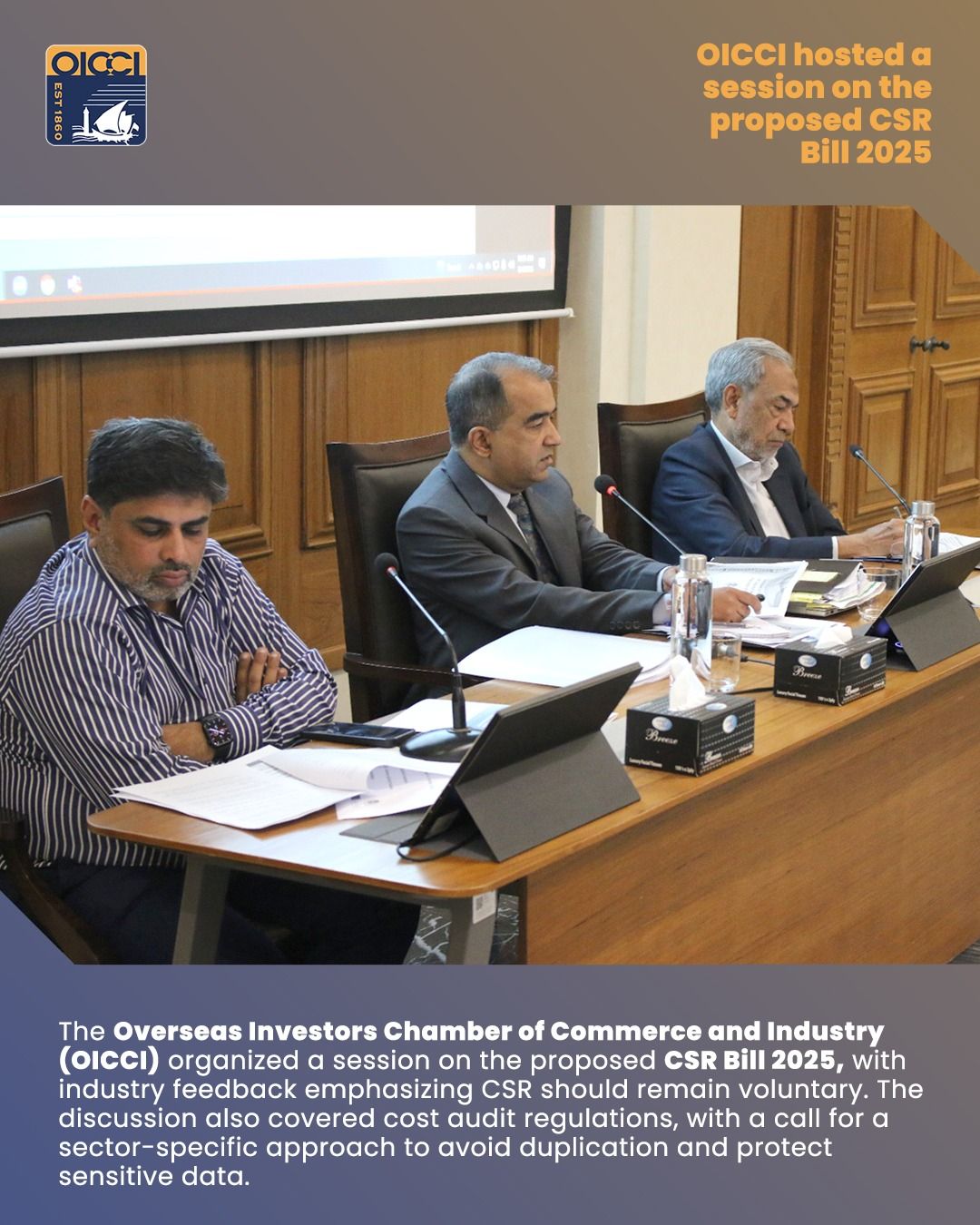
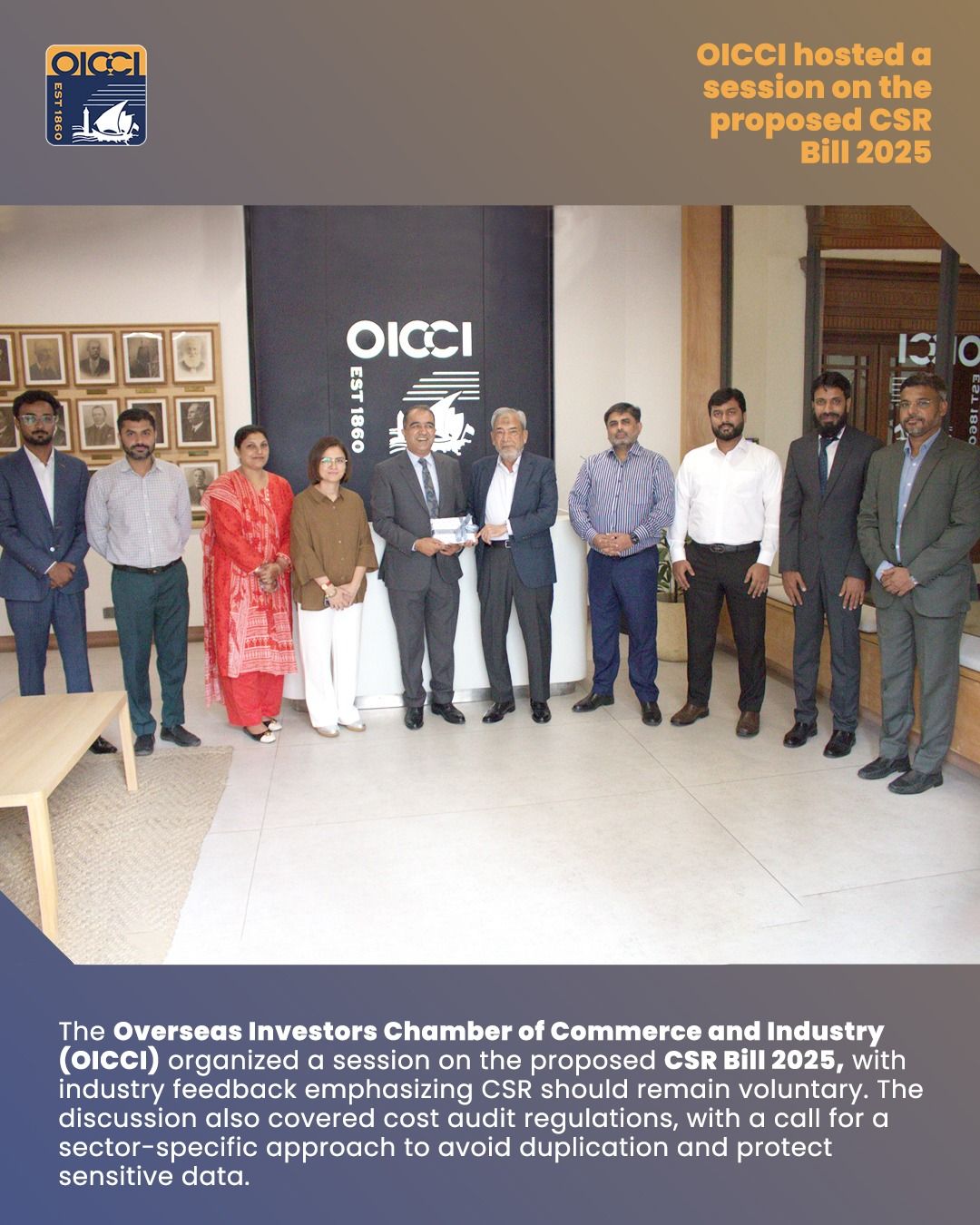
The session featured Ali Azeem Ikram, Executive Director and Divisional Head of Licensing and Registration at SECP, and Shahzad Afzal (TI) Khan, Registrar of Companies at SECP.
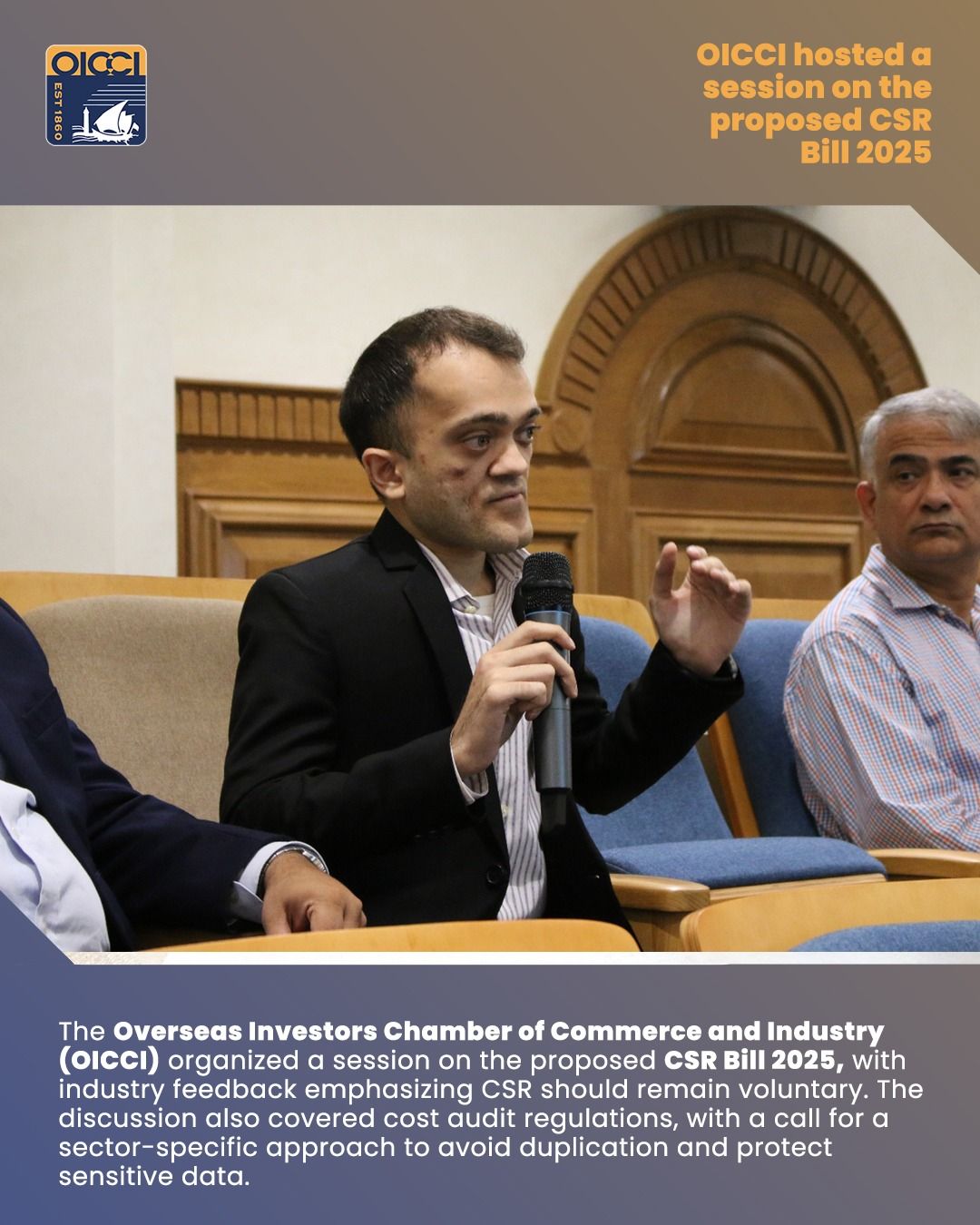
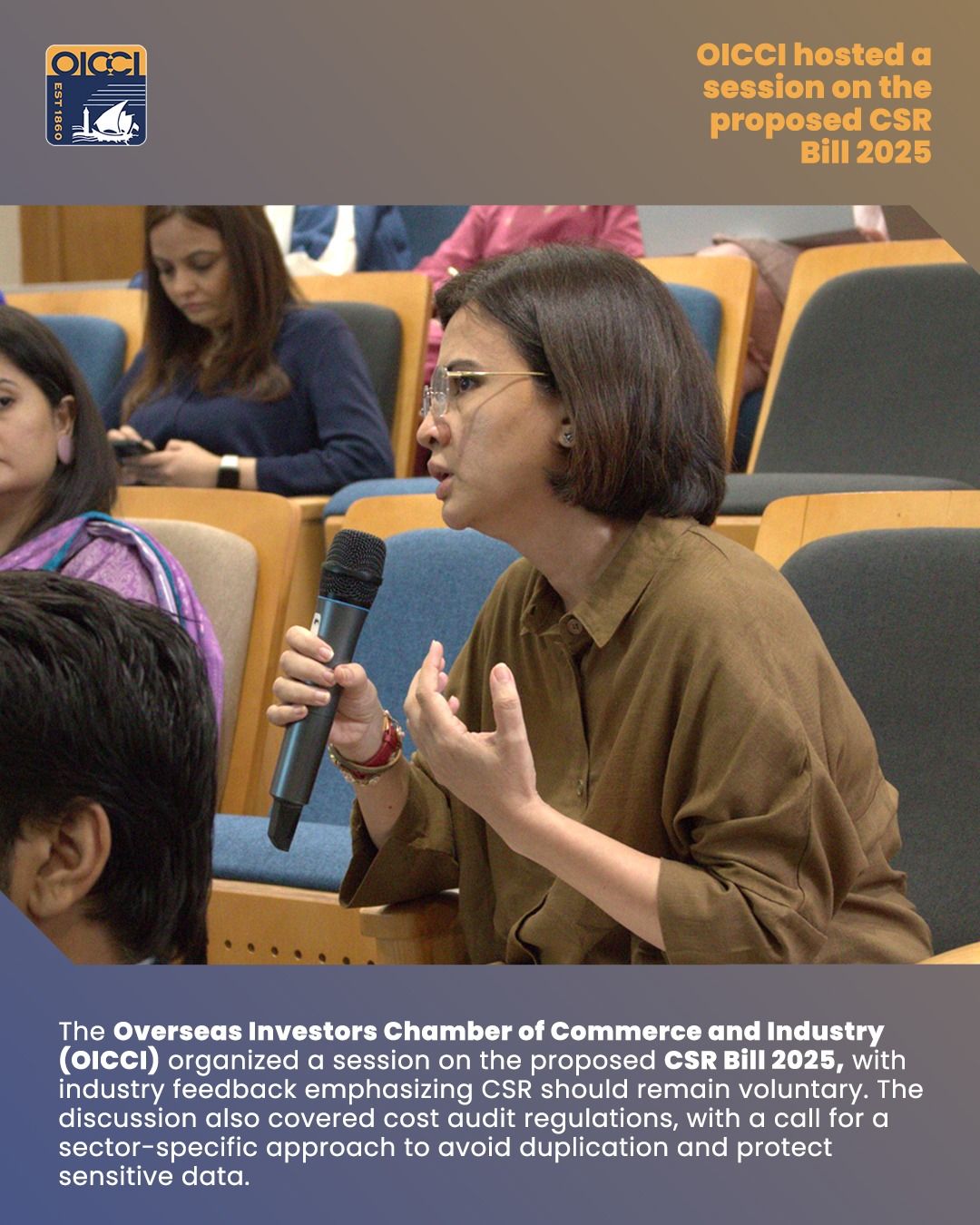
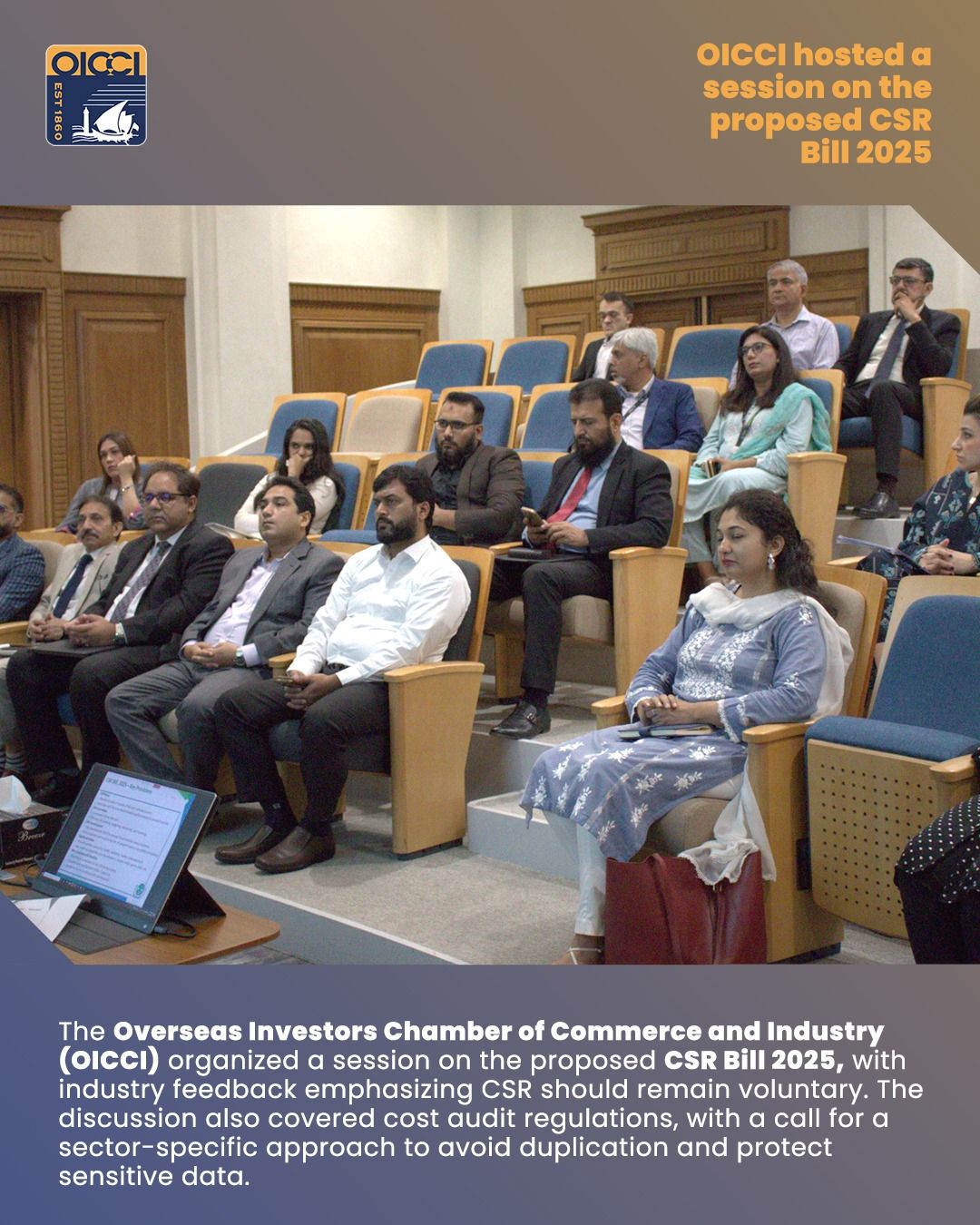
They were welcomed by M Abdul Aleem, Secretary General, Kashif Shafi, Executive Director and Sakina Chakera, Lead Research Officer. The first part of the session provided an overview of the proposed Corporate Social Responsibility (CSR) Bill 2025, which would apply to companies, banks, and SOEs. The key provisions of the Bill were discussed by Shehzad Afzal Khan and following this the floor was opened for feedback from member company representatives that were present.
Member company representatives from various sectors such as Oil and Gas, Pharma, Banking and FMCG provided the feedback that the decision of CSR should remain with the companies and should not be mandated. They stated that most companies are subject to existing regulations and were already investing more in CSR than the amount being mandated and those who do not, can be encouraged in other ways such as rewarding acknowledging those companies making significant contributions. M Abdul Aleem concluded this discussion by summarising that member companies agree that 1% CSR should not be mandated.
The second part of the session focused on cost audit regulations. SECP presented an overview of the regulatory evolution of cost auditing in Pakistan, along with sectoral coverage and international benchmarks. Member company representatives from various sectors raised concerns about potential duplication of regulatory obligations, noting that much of the required cost data is already maintained through tax audits and ERP systems.
There was a consensus on the need for a sector-specific or risk-based approach to cost audits, rather than an overall mandate. Concerns were also highlighted regarding the confidentiality of sensitive cost data, particularly in competitive industries. Participants recommended leveraging digital compliance tools already in place to reduce compliance burdens while ensuring transparency and efficiency.